Over the past century, Russia has become nearly synonymous with chess. In its various forms — the Russian Empire, the Soviet Union, and now simply Russia — the country has produced more grandmasters and world champions than any other, with its players making an indelible mark on the ancient game.
So, why Russians are so good at it?!
Let’s look at the history of chess in Russia first:
- Chess has a long history in Russia, with evidence suggesting it was brought to Old Russia in the 9th century via the Volga-Caspian trade route.
- From the 10th century, cultural connections with the Byzantine Empire and the Vikings also influenced the history of chess in Russia.
- In the Soviet era, chess was included in the courses for military pre-draft preparation, which led to the foundation of the Central Chess Club.
- Moscow hosted the first All-Union Chess Olympiad in 1920, with Aleksandr Alekhin, the future world chess champion, winning the tournament.
- Russia has produced many world chess champions, including Anatoly Karpov, Garry Kasparov, and Vladimir Kramnik.
Now what are specific features of Russian school of chess?
The main feature of Soviet chess that set it apart from all other chess-playing countries is its systemic dissemination of chess information. The amount of affordable chess literature printed by state publishers in the USSR was simply incredible (though, of course, there were rarities as well—for instance, the press run for Isaac Lipnitsky’s famous Questions of Modern Chess Theory was just 15,000 copies; I was told that Fischer learned Russian specifically to study this book). Novelties used by chess masters spread around the country relatively quickly.
Now with swiftly developed artificial intelligence, everyone can practice and have an access to various strategies.
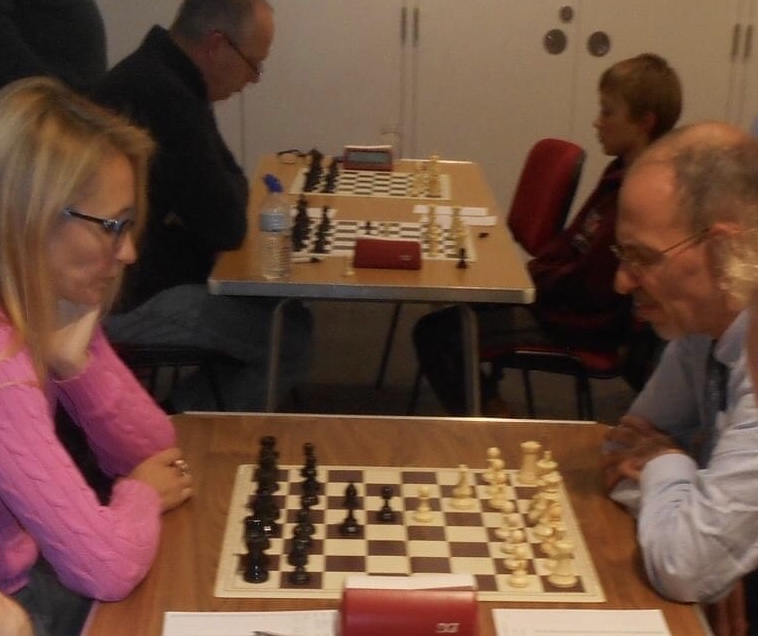
I started playing chess when I was a little girl, with pieces scattered around as my dad played with me. After moving to the UK, I joined a chess club and became part of the team squad for Cornwall.
Amazingly I have many students I met at the chess tournaments. “Are you Russian?!” – a question I anticipate, followed by a long friendship and teaching.
Why, then, do so many chess players choose to learn Russian? At first, I assumed it was to read tutorials and chess literature in the original language or to be coached by Russian players. But now, I’m convinced it’s something more — a fascination with Russian culture, where chess holds a special and enduring place.
Join me in speaking Russian and playing chess. Let’s have a battle on the chess board!
 Learn Russian in Cornwall